General · March 25, 2026
Plume’s GC Testifies at Congress on Future of Tokenization and US Capital Markets: Six Key Takeaways
Plume’s GC Testifies at Congress on Future of Tokenization and US Capital Markets: Six Key Takeaways.
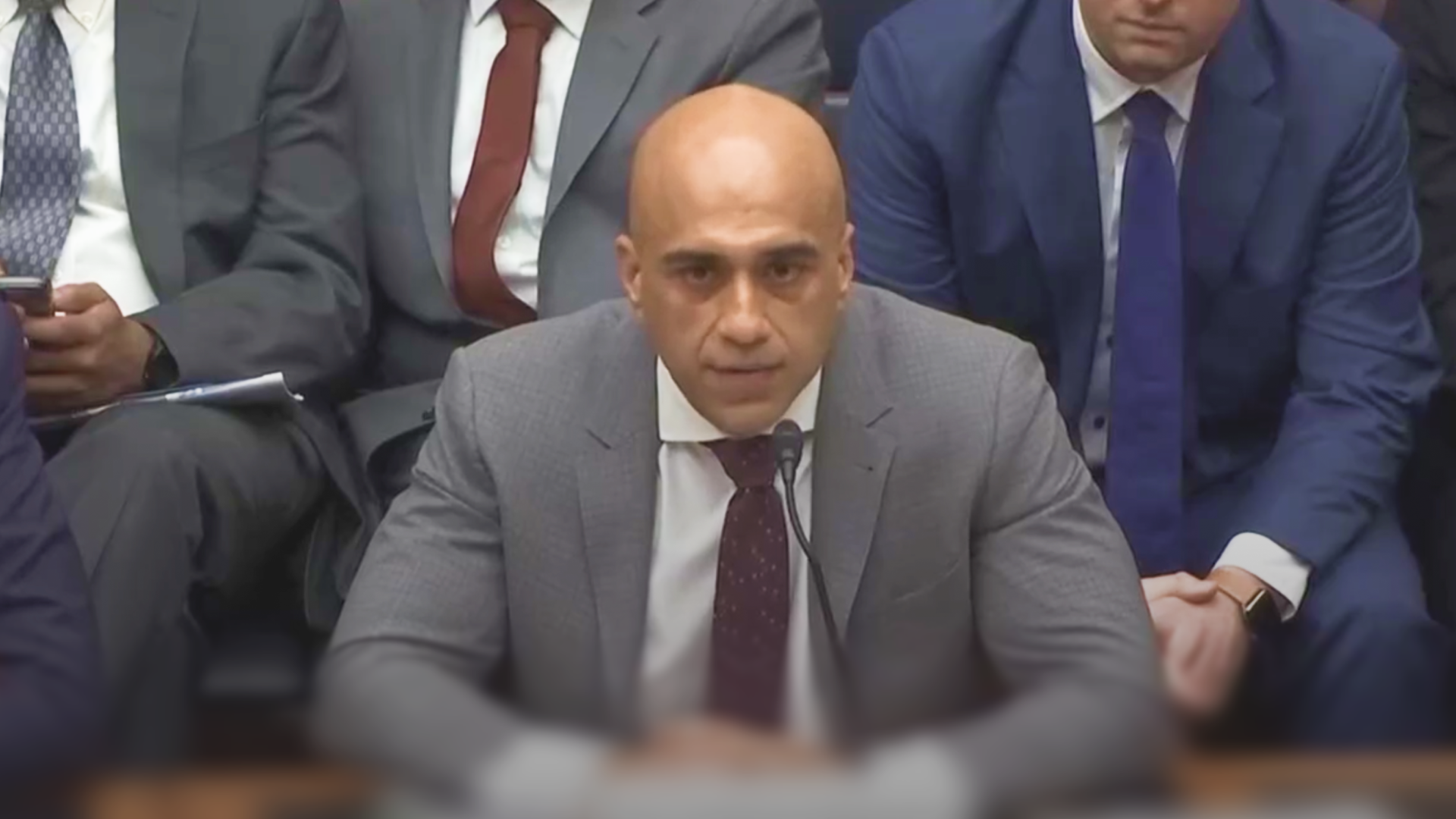
On March 25, Plume General Counsel Salman Banaei testified before the U.S. House Financial Services Committee at its hearing on “Tokenization and the Future of Securities: Modernizing Our Capital Markets.”
The hearing marked an important moment for the digital asset industry, not because tokenization is new, but because policymakers are now being forced to confront what it means for the future of U.S. capital markets.
Salman’s testimony laid out a clear case: tokenization is no longer a hypothetical innovation. It is becoming a live infrastructure question for the U.S. financial system.
These were the six biggest takeaways.

1. The real issue is no longer whether tokenization matters, it’s whether the U.S. will lead it
One of the clearest themes of Salman’s testimony was that the tokenization conversation has moved beyond theory.
The real question now is whether American capital markets infrastructure and regulation will be modernized to support tokenized finance, or whether that infrastructure will be built elsewhere. As Salman noted, jurisdictions like Hong Kong, Singapore, Switzerland, the EU, and the UAE are already moving aggressively with tokenization pilots, frameworks, and incentive programs.
That matters because tokenization is not just about new financial products. It is about who controls the rails of future capital formation.
If the U.S. does not create a workable framework, capital, issuers, and innovation will increasingly move offshore.
2. Tokenized securities do not need a separate rulebook
One of the most important points in the testimony was also one of the simplest: A tokenized security is still a security.
Salman argued that the economics and risks of a financial product, not the technology used to issue or transfer it, should determine how it is regulated.
That may sound obvious, but it is a crucial principle for policymakers.
The right goal is not to invent an entirely separate “crypto version” of securities law. It is to update existing rules so they can work in a tokenized environment, while preserving the investor protections and market integrity standards those rules were designed to achieve.
That is a much stronger and more durable framework than trying to regulate blockchain-based finance as a legal exception.
3. Fixed income is where tokenization can have the biggest near-term impact
Not every asset class stands to benefit equally from tokenization.
Salman’s testimony made the case that fixed income and debt markets should be the highest-priority starting point.
That makes sense. Bond markets are massive, fragmented, and still far less transparent and efficient than public equities. Tokenization can help address those frictions by reducing issuance costs, improving transferability, and making distribution more efficient. Salman cited research showing tokenized bonds can reduce bid-ask spreads, improve issuance efficiency, and lower issuance yield spreads.
He also highlighted one of the biggest hidden barriers to this market in the U.S.: TEFRA, a tax regime designed decades ago to discourage bearer bonds, which now unintentionally penalizes tokenized debt securities.
That is an important reminder that one of the biggest blockers to tokenized markets today is not technical infrastructure. It is outdated legal infrastructure.
4. Public equities require caution, but onchain IPOs could be a major unlock
One of the strongest parts of Salman’s testimony was that it did not take a maximalist “put everything onchain immediately” approach.
In fact, he argued that U.S. public equities should be approached carefully, because those markets are already highly liquid and efficient. Poorly designed tokenization could fragment liquidity and create parallel systems that harm investors rather than help them.
But he also pointed to an area where tokenization could be far more compelling: onchain IPOs.
Rather than trying to retrofit existing public stocks into fragmented tokenized markets, Salman argued that there is a stronger case for new securities to be issued natively onchain from inception.
That matters because the traditional IPO process remains expensive, concentrated, and highly intermediated. Onchain issuance could introduce more competition, lower costs, and potentially expand access to public capital markets.
That is a much more interesting policy conversation than simply asking whether today’s stocks should trade onchain tomorrow.
5. Funds may become one of the most important tokenization categories
A lot of tokenization discourse still focuses on “stocks onchain” or “bonds onchain.”
But one of the more important points in Salman’s testimony is that asset management products may become one of the clearest and most practical categories for tokenization to scale.
He pointed to the fact that major institutions including BlackRock, Franklin Templeton, Fidelity, Apollo, and Northern Trust are already actively exploring or launching tokenized fund products.
That is significant because tokenized funds sit at the intersection of:
- familiar financial products,
- regulated wrappers,
- programmable ownership,
- and digital distribution.
Salman outlined three reforms that could materially accelerate this category:
- updated custody rules for onchain fund infrastructure,
- support for multi-format funds with tokenized share classes,
- and reforms that allow secondary markets for tokenized mutual fund shares.
If tokenization is going to become part of mainstream finance, funds are likely to be one of the first places it happens at scale.
6. Compliance is not incompatible with public blockchains, it just has to be built differently
One of the most persistent misconceptions about tokenized finance is that open blockchain infrastructure is inherently incompatible with compliance.
Salman’s testimony pushed back on that directly.
His argument was not that compliance should be weakened. It was that compliance should be applied at the right points in the system, particularly at the application layer and regulated access points where users actually interact with tokenized financial products.
He also argued that public blockchains can, in some respects, offer better transparency than legacy financial infrastructure, because transactions are visible, traceable, and auditable in real time.
That becomes especially relevant in the context of illicit finance.
Salman proposed that tokenized securities markets should move toward a framework similar to what is now emerging for stablecoins: transaction monitoring, embedded controls, and token-level freeze-and-seize capabilities administered by regulated actors.
That is a very different model from “no rules onchain.”
It is a model for how regulated, globally distributed financial infrastructure can actually function in practice.
Final takeaway: Tokenization is becoming a market structure issue, not just a crypto issue
The biggest thing Salman’s testimony made clear is that tokenization is no longer just a niche digital asset conversation.
It is increasingly a market structure conversation.
How should securities be issued, transferred, settled, monitored, and distributed in a digital financial system?
What parts of legacy infrastructure still make sense?
And what should be rebuilt for a more programmable, global market environment?
Those are now live policy questions.
And as Salman made clear in his testimony, the infrastructure layer for future capital markets is already being built. The question is whether the U.S. chooses to lead that transition — or respond to it after the fact

Open finance together
Work with Plume to issue, distribute, and manage real-world assets.