General · July 21, 2026
Plume Update: Q2 2026
Q2 2026 was the quarter Plume doubled down on distribution and Open Finance.

Q2 2026 was the quarter Plume doubled down on distribution and Open Finance. While much of the industry remains focused on bringing assets onchain, Plume advanced on getting those assets into the hands of users through the channels where capital already lives.
- RWA Leadership: We closed Q2 with over $115M in RWA TVL and continued to lead the RWA category with over 200k holders, even compared to larger chains such as Solana and Ethereum.
- Regulatory Participation: We received in-principle approval for a Class M Digital Asset Business Licence from the Bermuda Monetary Authority, further establishing Plume as a compliant infrastructure layer for institutional asset issuance and distribution.
- Distribution at Scale: We expanded access to institutional-grade yield through neobanks, centralized exchanges, and DeFi-native protocols, including the second phase of Plume's distribution strategy, which saw ether.fi expand its commitment to Plume RWA Vaults through a $100 million allocation. This was followed by a first-of-its-kind earn integration with Bybit, one of the largest CEXes in the world, coupled with similar structured income offerings on Reah and GRVT.
- Asset Suite Expansion: nOPAL launched on Pendle Mainnet as the highest-yielding RWA market on the platform, and the FALX Structured Credit Facility with FalconX went live, broadening the range of real-world asset strategies available onchain. Concurrently, Plume’s internal risk curation team developed a flight-to-safety Base Yield Vault, yielding 4.5% APY (100bps above EFFR), pairing AAA CLOs with Investment Grade Bond Funds as an interest rate-hedged, principal-safe strategy.
- Brand Development: We covered a lot of ground this quarter, showing up at key events between Asia and the US where Plume anchored the RWA conversation. Our co-founders hosted keynotes at Korea's flagship finance and policy forums, Hong Kong's Web3 festival and EthConf in New York, while throwing in some amazing side-events with our partners from KeyRock and WisdomTree, during Consensus Miami, as well as an exclusive dinner with Apollo during DAS. Q2 also saw some solid earned coverage from The Block on our BMA licence and ether.fi partnership announcement, as well as Cointelegraph covering our integration with GRVT.
The first wave of tokenization solved issuance. Q2 was about solving what comes after: getting those assets into the hands of people who actually want them. That's the harder problem, and it's the one we spent the quarter on.
Letter from the CEO
Another insane quarter for tokenization. Numbers keep going up, more entrants come to the market, regulation continues to progress, and we see continued growth in the number of assets and the number of users.
This quarter marked a notable shift from the last few quarters. While we are still growing across the broader RWA category, we're beginning to see a rotation. Commodities and asset-backed credit saw a decline in total value, signifying not only a rotation away from those categories but also highlighting the wallet concentration in those categories. So despite the market growing in totality, this is the first time in a while that we've seen some contraction across certain categories.
However, in other categories we saw massive gains, primarily in tokenized equities, which nearly doubled in size across most metrics: value, holders, active wallets, etc. This was a breakout quarter for tokenized equities driven by a few key events across the world. AI stocks and memory in particular exploded, with Micron and SK Hynix commanding a lot of attention and driving users towards these assets. In tandem, we saw Saylor's STRC come onchain, promising a yield of 11%, which drove users in swarms to tokenized versions of it via APYX and Saturn. And finally, SpaceX went public with a very dramatic ending for onchain users, as several exchanges failed to secure allocation, with Binance alone having to refund over $550M to users who were hoping to secure some SpaceX in the public launch. Regardless, across all categories the demand showed up in swarms and was too big to ignore.
And while we saw lots of growth across RWA spot value in Q2, the real growth engine and story is in perps. Trade.xyz grew open interest from $1.9B to over $3.4B in the quarter, largely off of the same names mentioned above, with SK Hynix commanding most of the volume and OI. Just recently we saw that open interest on Trade.xyz had surpassed open interest on Hyperliquid itself, further signaling that not only were RWAs dominating onchain, but perps were a key figure in the story.
From our corner of RWAs, we saw the beginnings of the work we've been doing for the last few months come to fruition. We announced the expansion of our ether.fi integration with $100M committed to our RWA vaults, holding assets from FalconX, Fidelity, Blackrock, and more. We announced our integration with Bybit, which placed Plume Nest vaults directly into the centralized exchange in front of 80M+ users holding more than $15B of assets. We also launched our BlackOpal (nOPAL) Pendle market, pulling in several million dollars with double-digit yields. These key moves made it easy for users to now experience onchain RWAs directly where they already were, whether it was in an exchange, a neobank, or directly onchain.
Like we've said many times before, RWAs are one of the few markets with continued unbounded growth onchain. We are still sub 1% of the way there on our journey to not only tokenize the world, but make it easy for everyone to get access to and use those assets. We've been at this for several years, and it's always felt like the market was still developing and that we were a bit too early. Protocols were interested but not eager to integrate RWAs, exchanges were curious but hesitant, and users were not really allocating.
This quarter that changed. While it will still take more time for the market to digest all of the new assets and expand into them, the sentiment has shifted. Users, protocols, exchanges, curators, issuers, etc. are all ready and running at the opportunity. And so while we are still in phase 1 of this journey, we've now finally passed the initial skepticism around tokenized assets and are now moving towards exploration. We've gone from wait-and-observe to integrate-and-experiment. Binance launching bStocks with Alpaca, Bitget launching Reality, Coinbase integrating Ethena into their Earn product, Pre-IPO perps, Backpack launching fully compliant onchain equities, Baillie Gifford tokenizing their stock, and so much more give us a sense of where it's all going. Spot, perps, yield-bearing assets, equities, directs, indirects, etc. are all melding together into the incredibly dynamic market that is tokenized assets.
RWAs are now too big to fail. The only question now is how fast and how big each of these categories gets. An incredibly exciting time and grateful to get to build alongside all of the talented builders in this market. Much more to come, onwards!
- Chris Yin, CEO and Co-Founder of Plume
State of the Tokenization Market
Tokenized Assets Grew 13% in Q2
Tokenized real-world assets (excluding stablecoins) surpassed $34 billion, adding nearly $4 billion in value from Q1 and more than 5x over the past year. Beneath the headline growth, however, the quarter marked the beginning of a broader market rotation. While U.S. Treasuries remained the largest asset class, momentum increasingly shifted toward tokenized equities as growth across commodities and credit moderated.
- US Treasury Debt: Tokenized U.S. Treasuries grew to nearly $15 billion, remaining the industry's largest asset class as institutions continued to move cash management and short-duration products onchain.
- Commodities: After a strong start to the year, tokenized commodities declined 18% during Q2. Despite the pullback, the category remained one of the largest in tokenization, demonstrating that demand for digital commodities remains significant even as capital rotated elsewhere.
- Private Credit: Asset-backed credit contracted 28% during the quarter, representing the largest decline among major asset classes. The slowdown reflected changing capital allocation rather than weakening interest in tokenization overall, as investors increasingly shifted toward higher-growth sectors.
- Tokenized Equities: Tokenized equities emerged as Q2's breakout story. The market has now grown to approximately $1.8 billion, with monthly transfer volume exceeding $8.3 billion, highlighting that attention is shifting from simply issuing tokenized assets to actively trading them.
A notable structural shift: the market has moved from being dominated by a single asset class, tokenized US Treasuries, to having at least six categories that each independently exceed $1 billion in onchain value.
Plume’s Q2 Review
Mainnet and Nest Growth
Issuance is a problem largely solved, meaning the remaining hurdle is getting assets into the hands of people who want them, through the platforms they already use. Q2 was where we made real progress on that. The goal: make institutional-grade yield available through the platforms people already use, not ones they'd have to discover.
Taking Yield to Where Users Are
We built across four core channels during the quarter: neobanks, centralized exchanges, onchain infrastructure, and institutional prime brokerage.
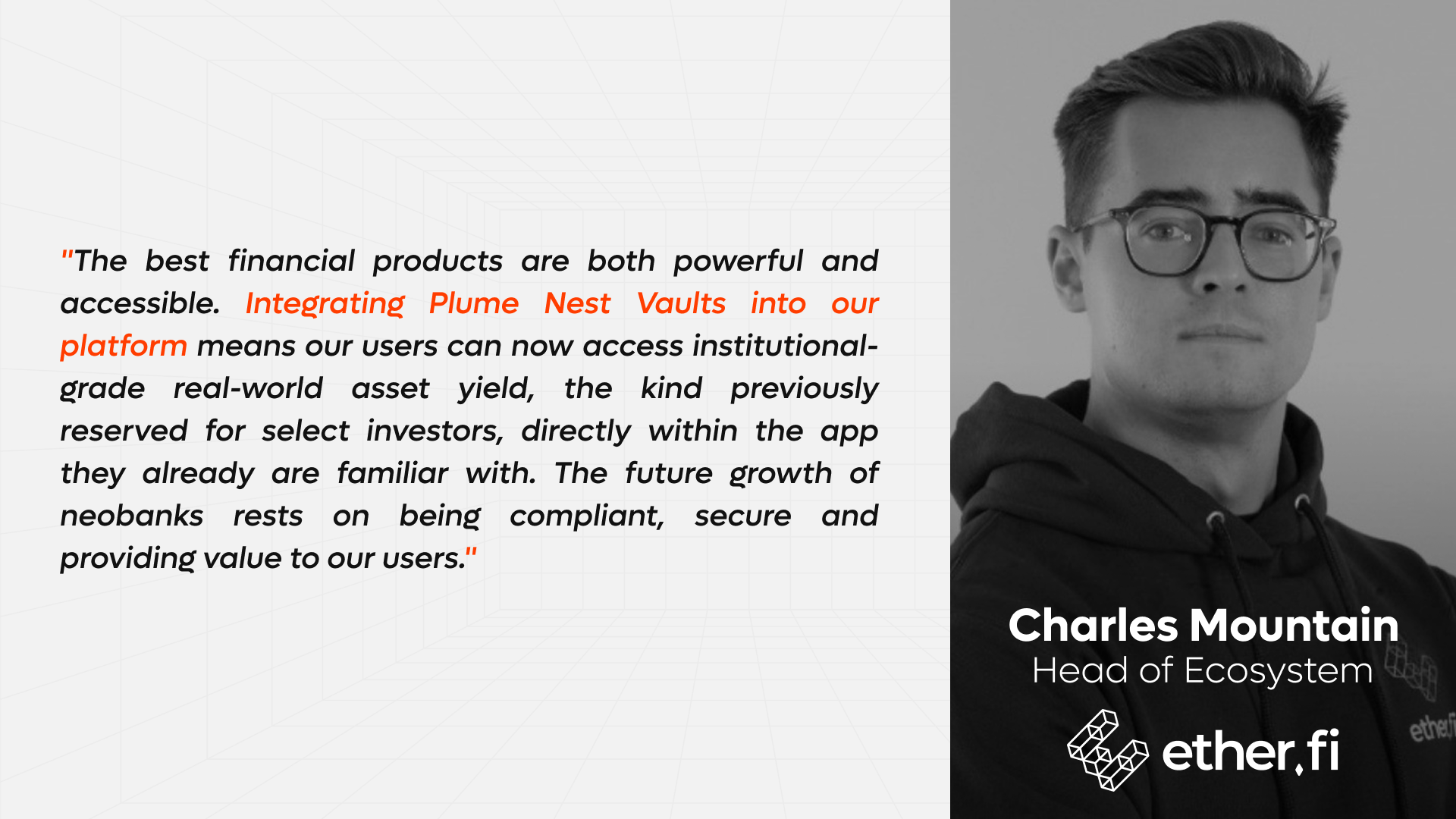
- Neobanks: Phase two of our ether.fi partnership closed with a $100 million allocation into a Plume RWA Vault. Ether.fi's global user base with over $6B of deposits now has direct access to real-world asset yield through their existing app, one of the largest examples of tokenized assets distributed through a consumer crypto platform.
- Centralized Exchanges: Bybit launched two structured income vaults powered by Nest, making institutional fixed income products from PIMCO and CMB International directly accessible to retail users through a stablecoin interface for the first time. With several more integrations in the pipeline, these launches signal that major crypto platforms are no longer treating real-world asset yield as a niche, it's becoming a core part of what they offer.
- Onchain Infrastructure: nOPAL, our Brazilian credit receivables vault, went live on Pendle, crossing $5M TVL within its first three weeks. The launch lets users earn fixed yield backed by real-world credit through DeFi infrastructure they already know.
- Institutional Prime Brokerage: Plume and FalconX launched the FALX Structured Credit Facility on Plume Nest Vaults, bringing onchain access to overcollateralized prime brokerage lending. Facilitated through Pareto and OpenTrade, and curated by M11 Credit, the vault allocates capital to a FalconX-managed credit pool, issuing fixed-rate fixed-term loans to high-frequency traders, hedge funds, and asset managers on FalconX's platform. With capacity to scale to approximately $1 billion, it offers intra-month subscriptions and a fixed monthly rate, making a strategy previously reserved for institutions available to a broader set of onchain participants.
Making Regulation Part of the Stack
Most projects treat compliance as something that happens after the product is built. We've never seen it that way. Regulation is part of the infrastructure, and in Q2, we made meaningful progress on three fronts: licensing, policy, and industry advocacy.
- Bermuda Digital Asset Licence: Plume received in-principle approval for a Class M Digital Asset Business Licence from the Bermuda Monetary Authority (BMA), one of the world's most respected digital asset regulatory frameworks. The approval positions Plume among a select group of firms operating under Bermuda's rigorous digital asset regime and represents a major step toward launching regulated onchain vault infrastructure. Our General Counsel, Salman Banaei, and Head of Regulatory Strategy, Alex Palmer, hosted a webinar breaking down what the approval unlocks. It’s worth a listen if you want to understand what compliant onchain vaults actually look like in practice.
- Advancing U.S. Tokenization Policy: We submitted 16 recommendations to the SEC for modernizing capital markets and unlocking tokenized securities in the United States. The recommendations came directly out of Salman's testimony before the U.S. House Committee on Financial Services, focused on clearer pathways for onchain capital formation, transfer, and settlement.
- Supporting DeFi Regulatory Clarity: Plume supported efforts by the DeFi Education Fund (DEF) to advance durable legal certainty for decentralized finance participants, interfaces, and infrastructure providers. As Open Finance grows, clear and innovation-friendly regulation remains critical to ensuring builders can continue bringing real-world assets and financial products onchain.

As tokenization moves from experimentation to adoption, regulatory credibility will increasingly separate infrastructure built for the long term from projects built for the cycle. Every milestone here expands what's possible: new asset classes, new distribution channels, and greater certainty for the institutions entering the market.
Product and Engineering
In Q2 we moved from rebuilding the foundation to proving it could carry real weight. Q1 was about redesigning Nest from the ground up. Q2 was about making that new foundation repeatable: more vaults, more partners, more complex products, and a higher operational bar across everything we ship.
Nest Vault Architecture
The biggest milestone of the quarter was completing the migration to the new Nest Vault architecture, introducing a modular framework that separates custody, accounting, compliance, and cross-chain orchestration. This makes the platform easier to scale, enables faster feature releases, and provides partners with a more stable foundation to build on.
Redemptions
We expanded redemption functionality across both EVM and Solana. EVM now supports instant redemptions through the new Actions API, while Solana users can choose between standard and instant redemptions. Together, these improvements increase flexibility while helping vaults manage liquidity more efficiently.
Leverage and Looping
We completed the core infrastructure for leverage and looping, including contract integrations, compliance, and audit work. Once launched, these features will allow users to access leveraged RWA strategies through a simplified experience, reducing the complexity of managing lending, redemption, and unwind flows manually.
Marketing and Brand
Q2 was about proving the thesis in public, turning the partnerships, regulatory milestones, and product launches into a coherent story that positioned Plume as the definitive home for Open Finance.
The Nest
Launched in Q1, The Nest podcast has continued to grow its presence as one of crypto's leading long-form podcasts covering tokenization, stablecoins, DeFi and institutional adoption. During Q2, the show featured high-profile guests including SEC Commissioner Hester Peirce, BitMEX co-founder, Arthur Hayes and leaders from MoneyGram, NEAR,and ether.fi.

APAC Expansion
Plume has planted its flag in Asia-Pacific. The team established a permanent base at Hong Kong Cyberport, the city's flagship innovation hub at the center of Hong Kong's push to become a global digital-asset capital, putting Plume in direct proximity to the regulators, banks, and institutional partners shaping the region's tokenization frameworks.
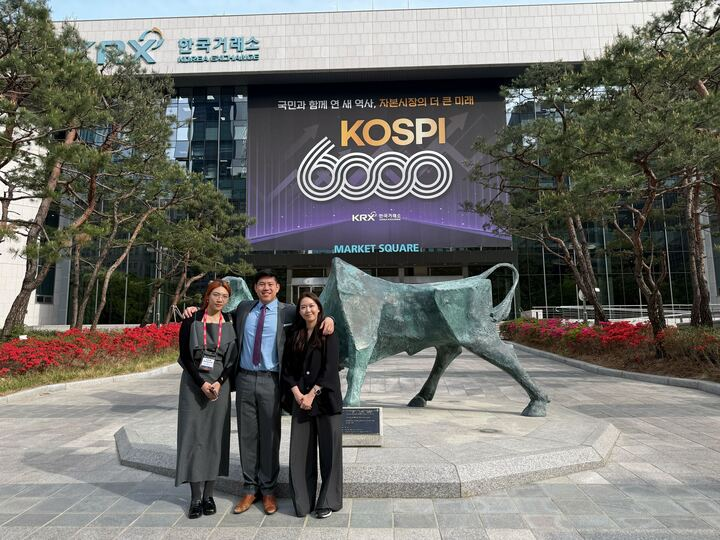
Korea was a step change this quarter. We moved from being known to being in the room, direct relationships with some of the country's largest financial institutions, engagement at the National Assembly level, and a community program converting Web2 retail investors into Nest participants. The groundwork we laid in Q1 is starting to pay off.
RWA Academy
Q2's RWA Academy continued building on the asset class foundations laid in Q1, shifting focus toward the bigger picture. The standout piece, ‘Open Finance Is the Only Path Forward’, made the case that DeFi's real innovations were always worth keeping, they just needed a better foundation: compliance built in from the start, regulated custodians, and the kind of trust that doesn't ask you to take anyone's word for it. That's what Open Finance is, and it's what Plume is building.
Media Placements
Q2 was a busy quarter for announcements, with coverage across The Block, Cointelegraph, Foresight News, and The Rollup picking up the ether.fi allocation, Bybit launch, and Bermuda licence milestones.
In Korea, the team secured 80+ placements this quarter, including 39 Tier-1 features, establishing Plume as the default reference point for RWA in Korean financial press. Dedicated media education sessions were run to deepen journalists' understanding of RWA, designed to increase Plume's mention rate in future reporting.
Conferences
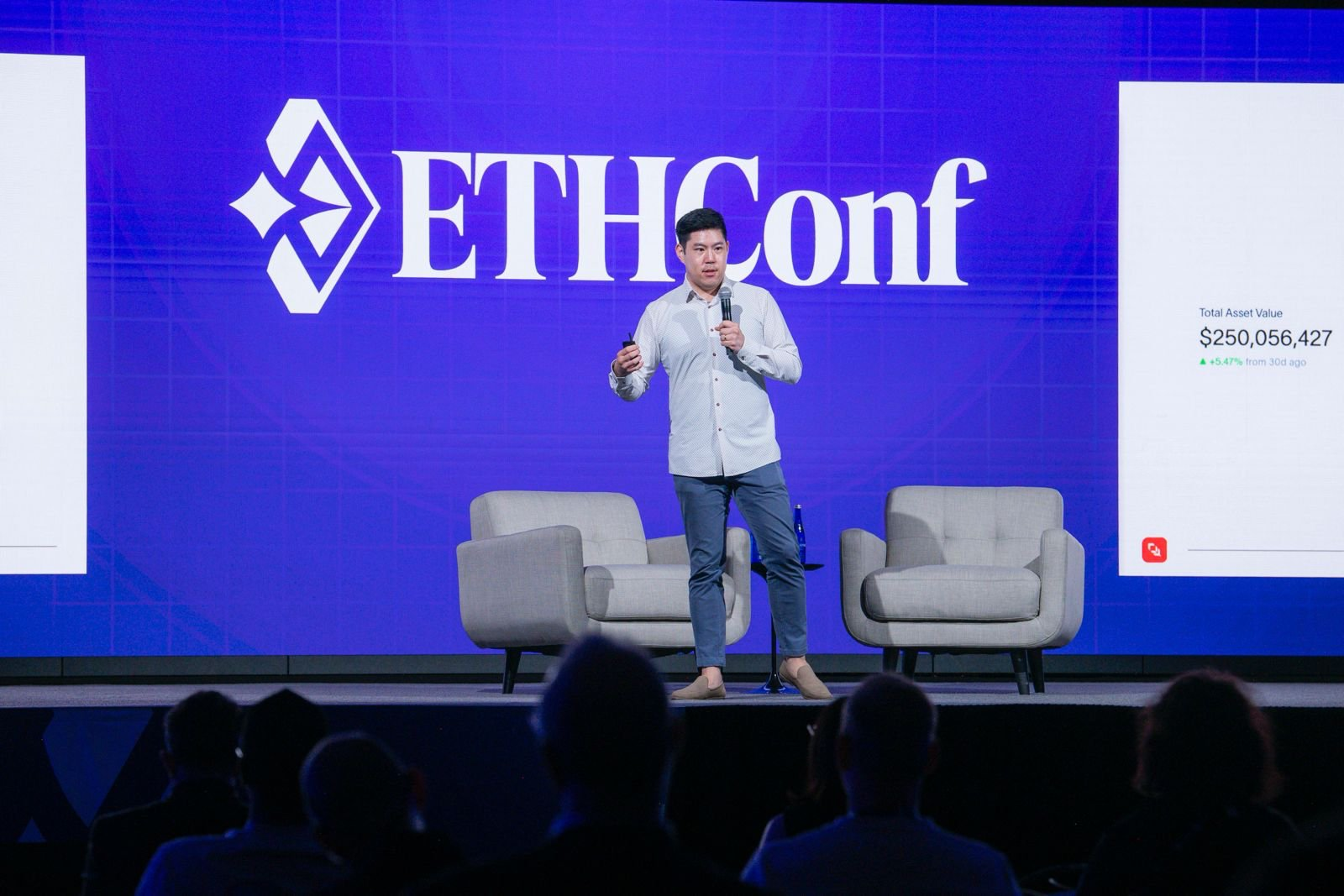
Q2 kept the team moving across continents. Co-founder Teddy took the main stage at the HK Web3 Festival and joined the HTX Genesis Hackathon, anchoring the RWA and open finance conversation across Hong Kong's flagship Web3 events. In Korea, the team appeared as speaker, panelist, and moderator across the Edaily Digital Asset Forum, Maekyung Capital Market Grand Forum, two National Assembly seminars, and several other leading finance and policy forums, while Chris met with top Korean securities firms and asset managers at the Virtual Asset Forum in Seoul.
Back in the West at Consensus Miami, we hosted curated dinners and networking events with institutional partners including WisdomTree and KeyRock. New York had a busy week with Vault Summit and ETHConf rounding out the quarter. Teddy led a panel on how to marry allocators to vaults, our GC was in conversation at a fireside chat with the Chief Counsel of the SEC's Crypto Task Force on the shift toward clearer digital asset frameworks, and Chris on the main stage cutting through the noise on what real progress in the space actually looks like.
Looking Ahead
- A new look: In Q3 Plume is working on a new look as we solidify as the home for Open Finance. This includes upgrades to the website, socials and communication channels.
- Deeper integrations: We have the distribution mechanisms started but we are not stopping. Q3 will bring deeper integrations, making RWA yield more accessible and open to users.
- Global Alignment: While we continue to build in the U.S., in Q3 we’re also broadening our scope across multiple regions, onboarding top-tier assets from multiple jurisdictions.
We’re incredibly excited and grateful to get to continue building in this market with everyone here. Much love and look forward to sharing the updates from next quarter.

Open finance together
Work with Plume to issue, distribute, and manage real-world assets.